|
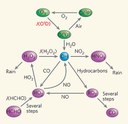 Atmospheric/Air Chemistry Atmospheric/Air Chemistry
The study of the chemical composition of the Earth's atmosphere. Topics include the emission, transport, and deposition of atmospheric chemical species; the rates and mechanisms of chemical reactions taking place in the atmosphere; and the effects of atmospheric species on human health, the biosphere, and climate.
|
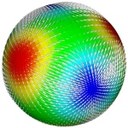 Atmospheric Dynamics Atmospheric Dynamics
The study of those motions of the atmosphere that are associated with weather and climate.
|
|
 Boundary Layer and Turbulence Boundary Layer and Turbulence
In physics and fluid mechanics, a boundary layer is that layer of fluid in the immediate vicinity of a bounding surface. In the Earth's atmosphere, the planetary boundary layer is the air layer near the ground affected by diurnal heat, moisture or momentum transfer to or from the surface.
|
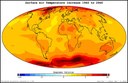 Climate Climate
The meteorological conditions, including temperature, precipitation, and wind, that characteristically prevail in a particular region.
|
|
 Clouds and Cloud Physics Clouds and Cloud Physics
Cloud physics is the study of the physical processes that lead to the formation, growth and precipitation of clouds.
|
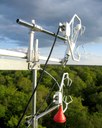 Earth-Atmosphere Interactions Earth-Atmosphere Interactions
The study interactions between the earth's surface, especially terrestrial ecosystems, and the atmospheric boundary layer, and the impacts of these interactions on weather and climate.
|
|
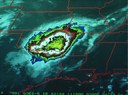 Mesoscale Meteorology Mesoscale Meteorology
The study of weather systems smaller than synoptic scale systems but larger than microscale and storm-scale cumulus systems. Horizontal dimensions generally range from around 5 kilometers to several hundred kilometers. Examples of mesoscale weather systems are sea breezes, squall lines, and mesoscale convective complexes.
|
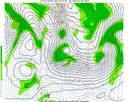 Numerical Weather Prediction Numerical Weather Prediction
Numerical weather prediction uses current weather conditions as input into mathematical models of the atmosphere to predict the weather.
|
|
 Oceanography Oceanography
Oceanography is an interdisciplinary science that uses insights from biology, chemistry, geology, meteorology, and physics to analyze ocean currents, marine ecosystems, ocean storms, waves, ocean plate tectonics, and features of the ocean floor, including exotic biomes such as cold seeps and hydrothermal vents.
|
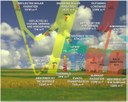 Radiative Transfer Radiative Transfer
The physics and mathematics of how radiation passes through a medium that may contain any combination of scatterers, absorbers, and emitters.
|
|
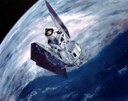 Remote Sensing Remote Sensing
The science of acquiring information about the Earth's surface without actually being in contact with it. This is done by sensing and recording reflected or emitted energy and processing, analyzing, and applying that information.
|
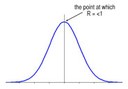 Statistical Meteorology Statistical Meteorology
The application of applied statistics, statistical tools, and artificial intelligence to a wide range of problems in meteorological analysis and forecasting at both weather and climate time scales.
|
|
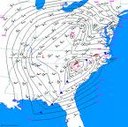 Synoptic Meteorology Synoptic Meteorology
The study and analysis of macro-scale atmospheric processes, as well as weather prediction based on results of synoptic studies.
|
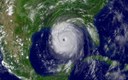 Tropical Meteorology Tropical Meteorology
The study of atmospheric structure and behavior in the areas astride the Equator, roughly between 30° north and south latitude. The weather and climate of the tropics involve phenomena such as trade winds, hurricanes, intertropical convergence zones, jet streams, monsoons, and the El Niño Southern Oscillation.
|
|
 Weather and Climate Risk Weather and Climate Risk
The role that weather plays as a source of financial and operational risk for businesses, markets and other institutions.
|
|